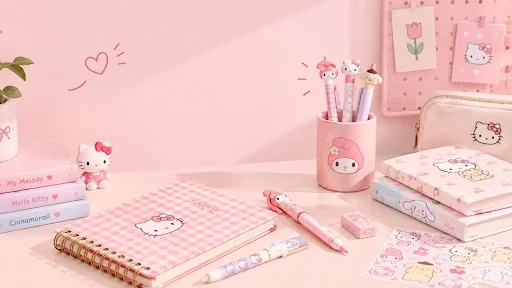
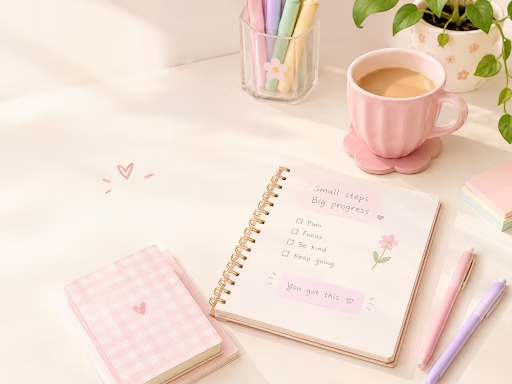
The best aesthetic notes ideas make your pages easier to study from as well as lovely to look at: a clear heading for every topic, a simple colour code, one consistent layout, and plenty of white space. When every pretty detail has a job, your notes look Pinterest-worthy and still help you revise faster.
Aesthetic notes are popular for a reason. When a page looks inviting, you’re more likely to open it again before an exam. The trick is building the look around how you actually study, and the note-taking ideas below do exactly that.
Aesthetic Notes Ideas Start With 5 Building Blocks
Every good page shares the same five building blocks. Get these right, and the rest is decoration.
| Part | What It Does | Aesthetic Touch |
| Heading | Names the topic at a glance | Lettering, banners, or highlighter swipes |
| Colour code | Separates definitions, examples, and key facts | Two or three soft shades |
| Layout | Organises information into sections | Columns, boxes, or a Cornell split |
| Visuals | Turns ideas into pictures | Diagrams, arrows, and tiny doodles |
| White space | Gives the eye room to rest | Margins and gaps between sections |
Most aesthetic notes ideas you see online are simply clever versions of these five parts.
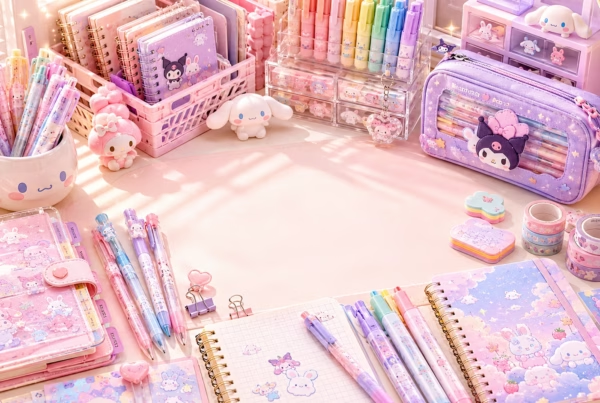
Cute stationery in a matching palette keeps every subject notebook looking like part of one calm, organised set.
How to Make Aesthetic Notes in 6 Steps
Here’s how to make aesthetic notes that stay useful from class to exam day.
- Choose your palette. Pick one dark pen for writing and two or three pastel colours for highlighting. Write the palette on the first page as a key.
- Take rough notes in class. Speed matters more than looks here. Use abbreviations and leave gaps.
- Rewrite within 24 hours. Copying notes neatly is also your first revision, so it does double duty.
- Add headings first. Write every heading before the body text so the page structure is clear.
- Fill in the content. Use short bullets, one idea per line, and keep sentences brief.
- Decorate last. Add highlights, boxes, and small doodles only once the information is complete.
A smooth black pen makes rewriting faster and neater. A Gel Pen for Students writes cleanly without smudging, which matters when you highlight over it later.
12 Pretty Headings for Notes
Headings set the mood of a page. These pretty headings for notes take less than a minute each:
- Highlighter swipe: one bold swipe of pastel highlighter, then write the title over it in black
- Shadow letters: write in black, then add a grey or coloured line on the right side of each letter
- Boxed title: a simple rectangle with rounded corners around the heading
- Banner ribbon: draw a ribbon shape with folded ends and write inside it
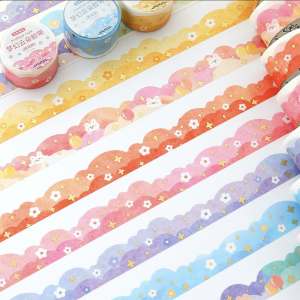
- Washi strip: a piece of washi tape as the background for your title
- Bubble letters: rounded, puffy letters for main chapter titles
- Double underline: one thick line and one thin line under the heading
- Cloud header: a soft cloud outline around the title
- Numbered circle: a filled circle with the topic number, followed by the title
- Brush lettering: thick downstrokes and thin upstrokes using a brush pen
- Sticky note header: a small sticky note at the top of the page with the topic name
- Dotted frame: small dots around the title instead of a solid line
Use one style for chapter titles and another for subtopics. Matching pretty headings for notes across a notebook instantly make it look organised.
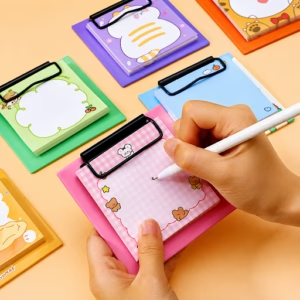
The sticky note header is perfect for topics you revisit often. Kawaii Sticky Notes double as page tabs, so you can find chapters quickly.
Note-Taking Ideas That Keep Notes Useful
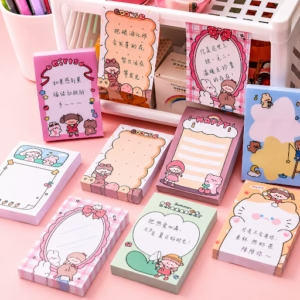
Pretty pages only help if the structure works. These note-taking ideas combine looks with real study value.
Cornell Method
- Split the page into a narrow left column, a wide right column, and a bottom strip
- Write notes on the right, key questions on the left, and a summary at the bottom
- Cover the right side and quiz yourself using the left column
Mind Maps
- Write the main topic in the centre inside a bubble
- Branch out with subtopics in different colours
- Perfect for history, biology, and literature chapters
Colour Code System
| Colour | Use It For |
| Pink | Headings and key terms |
| Blue | Definitions |
| Yellow | Examples and dates |
| Green | Formulas or important facts |
A simple key like this turns highlighting into a revision tool. These tips on choosing highlighters for notes help you pick shades that look soft but still stand out.
Boxes and Callouts
- Draw a box around formulas or definitions you must memorise
- Use a small star or exclamation icon for exam-important points
Pastel cute Highlighters work beautifully for colour codes, since soft shades keep pages calm while still marking what matters.
Aesthetic Notes for Students: Ideas by Subject
Different subjects suit different layouts. Here are aesthetic notes for students, sorted by subject:
| Subject | Layout Idea |
| Science | Labelled diagrams with arrows, formulas in boxes |
| Maths | Worked examples in steps, formulas on a sticky note |
| History | Timeline down the middle of the page with dates in colour |
| Geography | Mini maps with labelled points |
| English | Quote boxes with character notes beside them |
| Languages | Two-column vocabulary tables with doodles |
During board exam season, aesthetic notes for students work best when they’re quick to scan. Keep one formula sheet or summary page per chapter for last-minute revision.
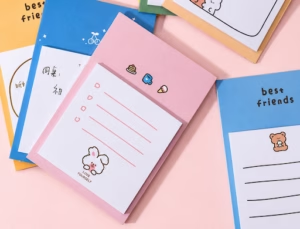
Sticky notes are great for quick formulas and reminders. These ideas for sticky notes for studying make revision more fun.
Supplies for Aesthetic Notes
Most aesthetic notes ideas need surprisingly few supplies:
- A black or dark grey gel pen for writing
- Two or three pastel highlighters
- A brush pen for headings
- A ruler for boxes and tables
- Sticky notes and washi tape for extras
A Morandi gel pen set gives you muted, matching shades that suit soft aesthetic note ideas perfectly.
Quick Tips
- Use dot grid paper: it keeps headings, boxes, and diagrams straight.
- Write slightly smaller than usual: more white space instantly makes a page look cleaner.
- Limit doodles to one per page: a single small drawing adds charm and keeps focus on the content.
- Batch your headings: letter all headings for a chapter at once for a consistent look.
- Photograph finished notes: a phone album of your notes is handy for revision on the go.
- Keep a “style page”: test pens, highlighters, and heading styles on one page so you always know which aesthetic notes ideas match.
Frequently Asked Questions
What are some easy aesthetic notes ideas for beginners?
Start with highlighter swipe headings, a two-colour code, and short bullet points. These aesthetic notes ideas take only a few extra minutes and make pages much easier to revise.
Do aesthetic notes actually help you study?
Yes, when the design supports the content. Clear headings, colour codes, and white space make information easier to find and remember.
How long does it take to make aesthetic notes?
Once you know how to make aesthetic notes, rewriting a chapter neatly usually takes 20 to 40 minutes. Since rewriting is also revision, the time counts towards studying.
Which pens are best for aesthetic notes?
A fine black gel pen for writing and soft colours for headings work best. Korean Gel Pens are a favourite for their smooth flow and pretty shades.
What notebook is best for aesthetic notes?
Dot grid or lightly lined notebooks with thick paper work well, since highlighters stay on their own side of the page. Aesthetic Notebooks with soft covers make every subject feel organised.
Shop the kawaii collection
-
Sale!
-
Sale!
 Select options This product has multiple variants. The options may be chosen on the product page
-
Sold Out
 Select options This product has multiple variants. The options may be chosen on the product page
-
Sold Out
 Select options This product has multiple variants. The options may be chosen on the product page

Explore More Blogs