Sticky notes for studying work best when used with a system rather than scattered randomly across a desk or textbook. A simple color code, a clear placement rule, and a habit of reviewing them daily turn a stack of small papers into an actual study tool instead of just decoration.
Studying can feel repetitive fast, especially during exam season when the same chapters get read over and over. Sticky notes are one of the easiest ways to break that pattern without adding extra effort. They are small, colorful, and flexible enough to fit into almost any study method, whether that is memorizing dates, breaking down formulas, or just keeping track of what still needs to be covered.
Here are a few ways to make sticky notes for studying actually useful instead of just cute clutter.
Sticky Notes for Studying by Subject or Priority
One of the simplest systems is assigning a color to each subject or task type, with cute stationery items
- Pink for revision topics that need more attention
- Yellow for quick facts or formulas to glance at before an exam
- Green for topics that are already covered and just need a final review
This turns a messy pile of notes into something readable at a glance, which saves time when flipping through a textbook under pressure.
Use Them as Active Recall Prompts
Instead of writing full notes, sticky notes work well for short prompts that force actual recall.
- Write a question on one side of the note and stick the answer underneath a flap or page
- Use single keywords instead of full sentences to trigger memory rather than just re-reading
- Place them on pages you tend to skip so they catch your attention naturally
This method works especially well for formulas, definitions, and dates that are easy to forget under exam stress.
Build a Visual Study Timeline
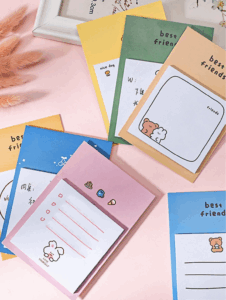
Sticky notes can double as a simple planning tool when a topic has multiple steps or stages.
- Stick notes in a row across a wall or notebook page to map out a timeline of events
- Use different shapes for different types of information, like arrows for cause and effect
- Move notes around as your understanding of the sequence gets clearer
This is particularly useful for history, biology processes, or any subject where the order of events actually matters.
Turn Sticky Notes into Mini Flashcards
Sticky notes double easily as compact flashcards without needing extra stationery.
- Write a term on the front and fold it slightly to hide the definition underneath
- Stack them by subject and flip through during short breaks
- Use smaller sticky notes for quick facts and slightly larger ones for anything needing more explanation
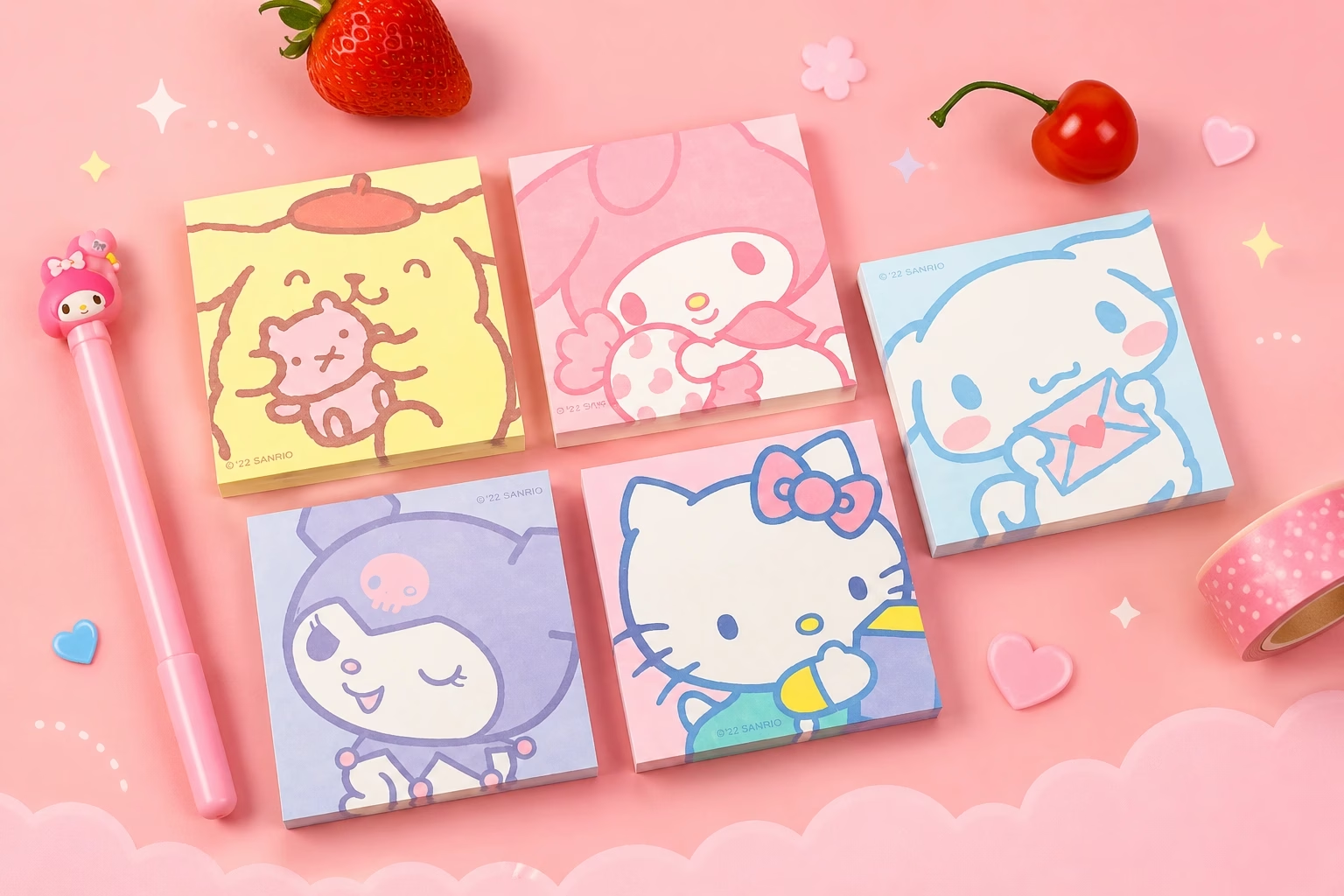
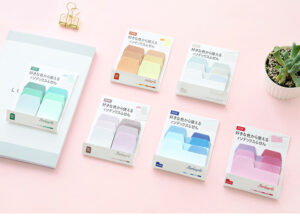
Since gradient sticky notes already come in varied sizes, they work well for exactly this kind of layered flashcard setup.
Mark Progress Instead of Just Tasks
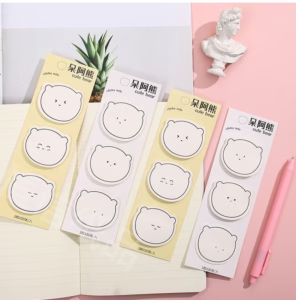
Sticky notes are often used only for to-do lists, but they work just as well for tracking what has already been done.
- Move a note from a pending column to a completed one as topics get finished
- Use a small sticker or checkmark drawn directly on the note once a task is done
- Keep a running count of completed notes visible somewhere on the desk
Seeing progress physically pile up tends to feel more motivating than crossing items off a single long list.
Decorate Without Losing Function
Making study material look nice does help with motivation, as long as it does not get in the way of actually using it.
- Stick to two or three colors per page so notes stay easy to read
- Use a slightly bigger note for anything that needs to stand out immediately
- Keep decorative elements like washi tape or stickers along the edges instead of over the text
A well-organized study space with a matching aesthetic across sticky notes, notebooks, and pens tends to get used more consistently than one that feels thrown together.
Pair Notes with the Right Pen
 The pen used on sticky notes matters more than it seems, especially for small surfaces.
- A finer tip prevents ink from bleeding through thin sticky note paper
- Consistent ink color across a subject helps notes stay visually organized
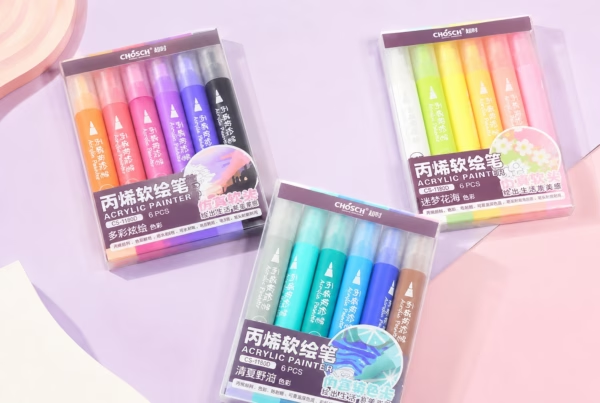
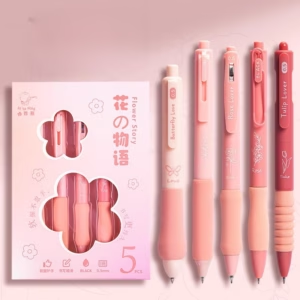
- A gel pen pack with a few shades makes color coding easier without needing several separate pens
Keep a Dedicated Sticky Note Station
Instead of keeping sticky notes scattered across a bag or drawer, a small dedicated spot on the desk keeps them easy to reach.
- A small holder or tray keeps different colors sorted and visible
- Keeping a kawaii diary nearby gives a place to transfer notes once a topic is fully reviewed
- Refilling the same spot regularly builds a habit of actually using the notes instead of forgetting they exist
Know When to Switch Formats
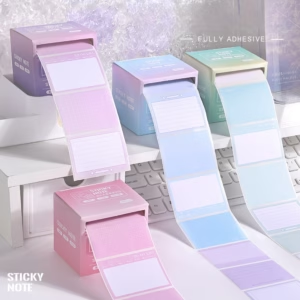
Sticky notes are useful, but they are not meant to replace every part of a study routine.
- Use them for quick recall and reminders, not long explanations
- Switch to a full notebook page once a topic needs detailed notes
- Combine both methods depending on how much depth a subject actually needs
Set a Weekly Reset Habit
Sticky notes pile up quickly during a busy study week, and an unreviewed stack stops being useful after a point.
- Pick one day to sort through notes and remove anything already memorized
- Rewrite any note that has become too faded or crumpled to read clearly
- Group leftover notes by subject before starting a new week so nothing gets missed
A short weekly reset keeps the whole system from turning into just another pile of paper sitting on the desk.
Sticky notes for studying work best as a small, flexible layer added on top of a regular study routine rather than a replacement for it. Once a simple system is in place, even a short revision session between classes starts to feel a little less repetitive.
For anyone looking to build out the rest of their study kit, cute pens for school cover a few options worth pairing with a sticky note system. And for a broader look at everything that fits into a kawaii study setup.
If color coding is part of the plan, gradient sticky notes make it easier to separate subjects at a glance without needing extra supplies.
For a wider range of colors, sizes, and designs, the kawaii sticky notes collection has plenty to pick from.
Frequently Asked Questions
How do sticky notes help with studying?
Sticky notes for studying work well for short prompts, active recall, and quick color-coded reminders, which are revised faster without needing to rewrite full notes.
What is the best way to color code sticky notes for studying?
Assigning one color per subject or priority level, like pink for weak topics and green for reviewed ones, makes it easy to scan through material at a glance.
Can sticky notes replace flashcards?
Yes, a sticky note folded to hide the answer underneath works the same way as a flashcard and takes up less space in a bag or drawer.
How often should sticky notes be replaced during exam prep?
A weekly reset works well, removing memorized notes and rewriting any that have become faded or hard to read.
Do sticky notes work for every subject?
They work best for short facts, formulas, and quick recall. Subjects that need detailed explanations are usually better suited to a full notebook page alongside sticky notes.
Shop the kawaii collection
-
Sale!
 Select options This product has multiple variants. The options may be chosen on the product page
 -
Sale!
 Select options This product has multiple variants. The options may be chosen on the product page
 -
Sold Out Sold Out
 Select options This product has multiple variants. The options may be chosen on the product page
 -
Sale!
 Select options This product has multiple variants. The options may be chosen on the product page
Explore More Blogs